
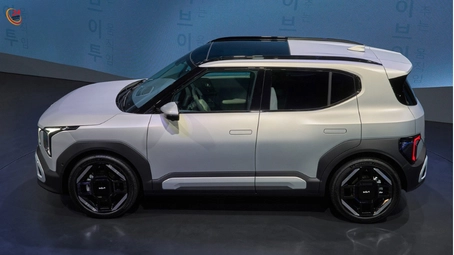
The rise of the electric car market in India has been driven by rising fuel prices, government incentives, and increasing environmental awareness. Many car buyers are now considering electric vehicles (EVs) as an alternative to traditional petrol cars.
But one of the most common questions people ask is: How much money can you actually save by switching to an electric car?
When comparing fuel costs, maintenance, and long-term ownership expenses, electric cars often provide significant savings for urban drivers. Let’s break down the numbers to understand how an e-car can reduce your transportation costs in India.
Running Cost Comparison: Electric Car vs Petrol Car
The biggest savings come from daily running costs.
In India, petrol prices in many cities are around ₹100–₹110 per litre. If a petrol car gives an average mileage of 15 km per litre, the cost of driving becomes roughly ₹6–₹7 per kilometer.
Electric vehicles, on the other hand, use electricity instead of fuel. Charging at home typically costs about ₹8–₹10 per unit, and most e-cars consume around 0.15–0.20 kWh per kilometer, resulting in a cost of roughly ₹1-₹2 per kilometer.
Average Cost per Kilometer
| Vehicle Type | Cost per KM |
|---|---|
| Petrol Car | ₹6 – ₹8 |
| Electric Car | ₹1 – ₹2 |
This means an e-car can be 4-6 times cheaper to run compared to a petrol vehicle.
Example: Monthly Savings for an Average Driver
Let’s assume a typical city driver travels 1,000 km per month.
Petrol Car
- Fuel cost: around ₹7,000 per month
- Annual cost: about ₹84,000
Electric Car
- Charging cost: around ₹1,800 per month
- Annual cost: about ₹21,600
Total Savings
- Monthly savings: about ₹5,000
- Annual savings: more than ₹60,000
This shows how switching to an e-car can significantly reduce daily commuting expenses.
Long-Term Savings Over 5 Years
If you drive 12,000 km per year, the savings become even more noticeable.
Electric Car (5 years)
- Energy cost: about ₹60,000
- Maintenance: around ₹25,000–₹30,000
- Total cost: about ₹85,000–₹90,000
Petrol Car (5 years)
- Fuel cost: about ₹4,20,000
- Maintenance: about ₹70,000–₹90,000
- Total cost: roughly ₹4,90,000–₹5,10,000
Total 5-Year Savings
Switching to an electric car could save around ₹4 lakh or more over five years.
Maintenance Cost Savings
Electric cars also save money on maintenance because they have fewer moving parts.
A petrol car typically requires:
- Engine oil changes
- Spark plug replacements
- Air and oil filter changes
- Engine servicing
Electric vehicles do not have these components. As a result, maintenance costs can be 30–40% lower compared to petrol cars.
Average annual maintenance:
| Vehicle | Maintenance per Year |
|---|---|
| Petrol Car | ₹10,000 – ₹15,000 |
| Electric Car | ₹4,000 – ₹6,000 |
Government Incentives for Electric Cars
India’s government is actively encouraging the adoption of electric vehicles through various incentives.
These include:
- EV purchase subsidies under national programs
- Reduced road tax and registration fees
- Lower electricity costs for charging
- Special EV policies in many states
These incentives reduce the initial purchase cost of an e-car, making them more attractive to buyers.
Environmental Benefits
Besides saving money, electric cars also help reduce air pollution.
Traditional petrol cars produce carbon emissions that contribute to climate change and urban pollution. Electric vehicles produce zero tailpipe emissions, making them a cleaner transportation option.
For cities like Delhi, Mumbai, and Bangalore where pollution levels are high, switching to e-cars can make a meaningful environmental impact.
Challenges to Consider
While electric cars offer many benefits, there are still some challenges:
Higher Initial Price
Electric cars usually cost more upfront compared to petrol cars.
Charging Infrastructure
Charging stations are still expanding across India, although availability is improving rapidly.
Battery Replacement
EV batteries may need replacement after 8–10 years, which can be expensive.
Despite these challenges, many drivers find that the long-term savings outweigh the drawbacks.
Who Saves the Most With an Electric Car?
Electric cars provide the biggest savings for people who:
- Drive frequently in cities
- Travel more than 800–1000 km per month
- Have access to home charging
- Plan to keep their car for several years
For such drivers, switching to an e-car can significantly reduce transportation costs.
Example of an Electric Car in India
To better understand the benefits of switching to an electric car, it helps to look at a real example from the Indian market. One of the most popular electric vehicles currently available is the Tata Nexon EV.
The Tata Nexon EV has become one of the best-selling e-cars in India because it offers a strong balance between performance, affordability, and driving range. The vehicle can travel approximately 325 to 465 kilometers on a single charge, depending on the model and driving conditions.
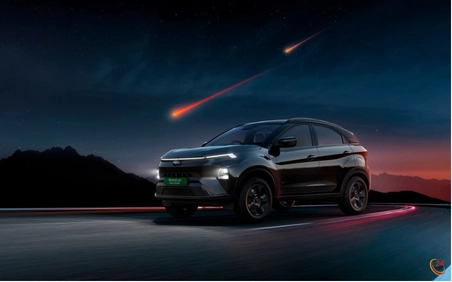
For a typical city commuter who drives about 1,000 kilometers per month, charging the Tata Nexon EV at home may cost around ₹1,500 to ₹2,000 in electricity. In comparison, a petrol car covering the same distance might require ₹6,000 to ₹7,000 worth of fuel. This means a driver could save roughly ₹4,000 to ₹5,000 every month by using an e-car.
Another popular example is the Tata Tiago EV, which is considered one of the most affordable e-cars in India. With a driving range of about 250 to 315 kilometers per charge, it is designed mainly for city commuting and short daily trips.
These examples show how e-cars are becoming practical options for everyday transportation in India. As more manufacturers introduce electric models and charging infrastructure improves, e-cars are likely to become even more common on Indian roads.
Conclusion
Switching to an electric car in India can lead to major financial savings. With electricity costs much lower than petrol and maintenance requirements significantly reduced, EV owners often save thousands of rupees every month.
For an average driver, the savings can reach ₹60,000 or more per year and potentially ₹4 lakh or more over five years.
As charging infrastructure improves and electric car technology advances, electric vehicles are likely to become an even more attractive option for Indian car buyers in the coming years.
Stay with us for reliable and insightful news from 24 Hour Update!