
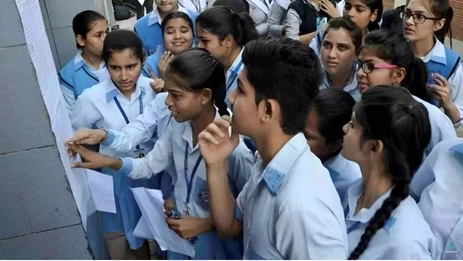
Government exams in India 2026 will remain a major career path for students and job seekers who want stability, public service, respect, and long-term growth. Every year, lakhs of candidates prepare for exams conducted by UPSC, SSC, banking bodies, railways, defence services, state commissions, teaching boards, and other recruitment agencies. The opportunity is big, but the competition is also serious.
This guide explains the best government exam options to watch in 2026, how to choose the right exam, how to plan preparation, and what mistakes candidates should avoid. The article is written in simple language so beginners can understand the road ahead without feeling lost.
Government exams in India 2026: Overview
Government exams in India are not all the same. Some exams focus on administration, some on clerical work, some on banking, some on technical posts, and some on defence or teaching. A candidate should not start preparation only because an exam is popular. The better approach is to understand eligibility, syllabus, job role, salary, transfer policy, exam frequency, and personal interest.
In 2026, competition may become more organised because candidates now have access to online classes, test series, digital libraries, YouTube lectures, mobile apps, and discussion groups. This access is helpful, but it also creates distraction. Serious candidates need discipline more than unlimited material.
The best strategy is to select one primary exam and one backup exam with overlapping syllabus. For example, a candidate preparing for SSC can also prepare for some state-level clerical exams. A banking aspirant can attempt IBPS, SBI, RBI assistant-level posts, and insurance exams. This reduces risk and makes preparation more efficient.
Why Government exams in India 2026 matter
Government exams in India 2026 matter because public sector jobs still offer strong career security. Many families value government jobs for regular income, social respect, pension-related benefits in some roles, housing or medical facilities in specific departments, and predictable career progression.
These exams also open doors for candidates from different backgrounds. A student from a small town can compete with a student from a metro city if preparation is consistent and the exam rules are followed carefully. This makes government recruitment one of the most important mobility channels in India.
Another reason is the range of choices. Candidates can prepare for high-level services like UPSC Civil Services, graduate-level exams like SSC CGL, banking exams like IBPS PO, technical roles through engineering exams, teaching eligibility tests, railway recruitment, police services, and state public service commissions. This variety allows candidates to match preparation with their strengths.
10 best government exam options in 2026
1. UPSC Civil Services Examination
UPSC Civil Services is one of the most respected government exams in India. It recruits officers for IAS, IPS, IFS, IRS, and other central services. The exam has three stages: Prelims, Mains, and Interview. It requires deep understanding of current affairs, history, polity, economy, geography, environment, ethics, and essay writing.
This exam is best for candidates who are ready for long-term preparation and serious reading. It is not suitable for those looking for quick results. A candidate should have patience, writing ability, analytical thinking, and emotional balance.
2. SSC CGL
SSC CGL is a strong option for graduates who want central government posts in ministries, departments, and offices. The exam generally tests reasoning, quantitative aptitude, English, and general awareness. It is popular because the syllabus is structured and many posts offer stable career growth.
SSC CGL suits candidates who enjoy aptitude practice and can revise regularly. Speed and accuracy are very important. Mock tests, previous-year papers, and error analysis can make a major difference.
3. Banking exams: IBPS PO, SBI PO, and Clerk
Banking exams are among the most practical choices in Government exams in India 2026. They are conducted more regularly than many other recruitment exams and offer opportunities in public sector banks. The main sections include reasoning, quantitative aptitude, English, general awareness, and banking awareness.
Banking roles require customer handling, basic financial understanding, computer awareness, and target-based work in some positions. Candidates who are comfortable with numbers and time-bound online tests can consider this path.
4. Railway recruitment exams
Railway jobs attract candidates because of the size of the Indian Railways network and the variety of posts. Recruitment may include technical and non-technical roles. Candidates should carefully check official notifications because eligibility and exam patterns vary by post.
Railway preparation often includes mathematics, reasoning, general science, and general awareness. Technical posts may require trade-specific knowledge. Candidates should not rely on rumours; official notices are essential.
5. State Public Service Commission exams
State PSC exams recruit officers for administrative roles within individual states. These exams are important for candidates who want to work in their home state or understand regional issues well. The syllabus often includes state history, geography, economy, polity, culture, and current affairs.
State PSC preparation is different from national exams because local knowledge matters. Candidates should read state government websites, local newspapers, budget documents, and previous-year papers.
6. Defence exams: NDA, CDS, AFCAT and related entries
Defence exams are ideal for candidates who want discipline, service, physical fitness, and a uniformed career. NDA is for younger candidates after school, while CDS and AFCAT are graduate-level options. These exams test academic knowledge, aptitude, English, general awareness, and officer-like qualities.
Defence preparation is not only about written exams. Physical fitness, medical standards, personality, communication, and SSB interview performance are also important. Candidates should start fitness preparation early.
7. Teaching exams: CTET, TET and recruitment tests
Teaching remains a respected career path in India. CTET and state TET exams are important for school teaching eligibility, while separate recruitment exams may be conducted for teacher posts. Candidates need understanding of child development, pedagogy, language, mathematics, environmental studies, and subject knowledge.
This option is suitable for candidates who enjoy explaining concepts and working with students. Good teachers need patience, communication skills, and continuous learning habits.
8. RBI and insurance sector exams
RBI assistant-level posts, RBI Grade B, LIC, and other insurance exams can be good options for candidates interested in finance, administration, and public institutions. RBI Grade B is more demanding and requires strong knowledge of economy, finance, management, and current affairs.
Insurance and financial-sector exams often have patterns similar to banking exams, but candidates should check each notification separately. General awareness and financial awareness can play an important role.
9. Police and paramilitary recruitment
Police, CAPF, and paramilitary recruitment exams are important for candidates who want uniformed service but may not be targeting officer-level defence entries. These exams may include written tests, physical efficiency tests, medical checks, and document verification.
Physical preparation should begin early. Many candidates clear written sections but struggle in physical tests because they start late. Running, strength training, diet, and medical fitness should be taken seriously.
10. Technical government exams
Engineering graduates, diploma holders, ITI candidates, nurses, pharmacists, and other technical students can apply for department-specific government posts. These may be advertised by PSUs, state boards, hospitals, universities, railways, and public departments.
Technical candidates should keep documents ready, track official websites, and revise core subjects. Unlike general exams, technical posts may require deeper subject knowledge and sometimes interviews or skill tests.
How to choose the right government exam
Choosing the right exam is one of the most important decisions for aspirants. Many candidates waste years because they attempt every exam without a clear plan. The better method is to compare exams based on eligibility, syllabus overlap, personal strengths, job location, selection stages, and preparation time.
If you are strong in maths and reasoning, SSC or banking may be suitable. If you enjoy reading, writing, and public issues, UPSC or State PSC may be better. If you are physically active and want uniformed service, defence or police recruitment can be considered. If you like teaching, CTET and state teaching exams may fit your personality.
Do not choose an exam only because relatives recommend it. A government job is a long career. The role should match your temperament, lifestyle expectations, and long-term goals.
Preparation plan for Government exams in India 2026
A good preparation plan starts with the official syllabus. Download the latest notification or syllabus from the official website. Print it or save it in a document. Every topic you study should connect with that syllabus.
Next, collect previous-year papers. These papers show the real level of the exam. Many beginners read heavy books without understanding what the exam actually asks. Previous papers prevent this mistake.
Make a weekly timetable with fixed slots for concepts, practice, revision, and mock tests. Revision should not be left for the last month. A topic studied once and never revised is almost equal to a topic not studied properly.
- Study the syllabus before buying books or courses.
- Solve previous-year papers early.
- Keep one notebook for mistakes.
- Revise current affairs weekly.
- Attempt mock tests in exam-like conditions.
- Analyse wrong answers after every test.
Best study resources and habits
Resources should be limited and reliable. Too many books, PDFs, apps, and videos can confuse candidates. Select one main source for each subject and revise it multiple times. For current affairs, choose one newspaper or monthly magazine and follow it consistently.
Online classes can help if they provide structure, but they cannot replace self-study. Watching lectures for hours without solving questions is a common trap. Active practice is necessary for improvement.
Free resources can also be useful. Official websites, PIB releases, government reports, previous-year papers, and digital libraries can support preparation. Candidates should use technology as a tool, not as a distraction.
Common mistakes to avoid
The first mistake is changing exam targets too often. A candidate starts with UPSC, shifts to banking, then SSC, then state exams, and finally loses direction. Backup exams are good, but the primary target should remain clear.
The second mistake is ignoring health. Long sitting hours, poor sleep, junk food, and stress can reduce memory and focus. A short walk, simple exercise, and proper sleep can improve preparation quality.
The third mistake is not analysing mock tests. A mock test is useful only when you study your mistakes. Check whether the error came from lack of knowledge, calculation, reading speed, pressure, or careless marking.
Suggested images for Government exams in India 2026
- Students preparing with books and laptop. Alt text: “Government exams in India 2026 preparation”.
- Exam calendar and study timetable graphic. Alt text: “Government exams in India 2026 study plan”.
- Candidate reading official notification. Alt text: “Government exams in India 2026 notification guide”.
Useful links for aspirants
For official exam information, candidates can visit UPSC and the National Digital Library of India. For related reading on this site, check AI tools for students India and Responsible AI in 2026.
Monthly preparation calendar for Government exams in India 2026

A monthly calendar helps candidates avoid random study. In the first month, focus on understanding the syllabus, collecting previous-year papers, and identifying strong and weak subjects. Do not rush into advanced material before the basics are clear.
In the second and third months, build subject foundations. For aptitude-based exams, practise arithmetic, reasoning, English grammar, and general awareness every week. For UPSC or State PSC, combine static subjects with current affairs and answer writing.
From the fourth month onward, mock tests should become part of the routine. A mock test is not only a scorecard. It is a mirror that shows time management, question selection, silly mistakes, and pressure handling.
In the final phase, reduce new material and increase revision. Many candidates fail not because they never studied a topic, but because they could not recall it during the exam. Revision is the bridge between preparation and performance.
Mental balance during Government exams in India 2026 preparation
Exam preparation can become stressful when candidates compare themselves with others. Social media screenshots, topper routines, coaching advertisements, and peer pressure can create anxiety. Aspirants should remember that every candidate has a different background, speed, and responsibility.
A healthy routine improves study quality. Sleep on time, eat simple food, drink enough water, and take short breaks. A tired mind reads more but remembers less. Good preparation is not about punishing yourself; it is about training yourself.
Family support also matters. Candidates should explain their exam plan at home, including expected timelines and backup options. Clear communication reduces pressure and helps family members understand the preparation journey.
Document readiness for Government exams in India 2026
Many candidates focus only on study and forget documents. Keep scanned copies of Aadhaar, educational certificates, caste certificate if applicable, income certificate if required, photograph, signature, and category documents ready in the correct size and format.
Small mistakes in forms can create big problems later. Always fill applications from the official website, check spelling, verify dates, and save confirmation pages. Use an active email ID and mobile number because exam updates are often sent digitally.
Document readiness does not take much time, but it prevents panic near deadlines. Serious candidates should create one folder on their computer and one backup folder online for important exam documents.
Backup strategy for Government exams in India 2026
A backup strategy is not a sign of weakness. It is a practical way to protect time and effort. Candidates can choose one main exam and two related backup exams that share similar subjects. This keeps preparation focused while increasing selection chances.
For example, an SSC aspirant may also attempt state clerical exams. A banking aspirant may attempt insurance exams. A State PSC aspirant may attempt other state-level posts with similar general studies. The key is syllabus overlap, not random applications.
Backup planning should also include skill development. Basic computer knowledge, communication skills, typing practice, financial awareness, and interview confidence can help candidates beyond one exam cycle.
Keep the plan realistic, written, measurable, and reviewed every Sunday.
Stay patient always.
FAQs on Government exams in India 2026
Which are the best Government exams in India 2026?
The best Government exams in India 2026 include UPSC Civil Services, SSC CGL, banking exams, railway recruitment, State PSC, defence exams, teaching tests, RBI, insurance exams, police recruitment, and technical government posts.
How should beginners prepare for Government exams in India 2026?
Beginners should start with the syllabus, previous-year papers, basic books, a realistic timetable, and regular revision. They should avoid collecting too many resources in the first month.
Can I prepare for multiple Government exams in India 2026?
Yes, but choose exams with overlapping syllabus. Preparing for too many unrelated exams can reduce focus and waste time.
How many hours should I study daily?
The number of hours depends on your exam and current level. Four focused hours can be better than ten distracted hours. Consistency matters more than showing off long study time.
Conclusion: Government exams in India 2026
Government exams in India 2026 can offer strong opportunities, but success requires the right exam choice, disciplined preparation, reliable resources, health balance, and patience. Candidates should avoid shortcuts and focus on steady improvement.
The best aspirants are not always the ones who study the longest. They are the ones who understand the exam, revise regularly, learn from mistakes, and stay consistent until the final result.
