
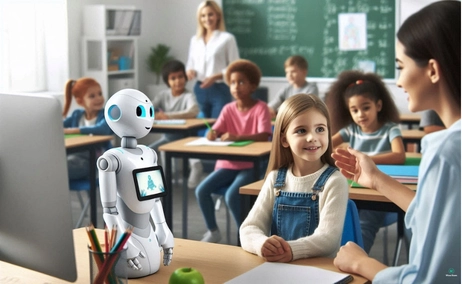
AI tools for students India are becoming useful for study planning, note-making, language improvement, exam revision, research, coding practice, and presentation work. Indian students now use mobile phones, laptops, online classes, and digital libraries more than ever, so artificial intelligence can support learning when it is used responsibly.
This article explains 10 practical AI tool categories for Indian students. It also covers safe usage, mistakes to avoid, exam preparation tips, suggested images, useful links, and FAQs. The goal is to help students learn better, not copy blindly.
AI tools for students India: Overview
AI tools for students India are becoming extremely useful for study planning, note-making, language improvement, exam revision, coding practice, research work, and presentations. In 2026, more students are using smartphones, laptops, online classes, and digital libraries, which is why AI tools for students India are growing rapidly across schools, colleges, coaching centers, and online education platforms.
The biggest advantage of AI tools for students India is that they can save time and simplify difficult topics. A student can ask AI to explain a science chapter in simple language, summarize long notes, generate quiz questions, improve grammar, or help create a revision timetable. These practical uses make AI tools for students India valuable for daily learning when used responsibly.
However, students must remember that AI tools for students India should act as study assistants, not replacements for real learning. The smartest students use AI tools for students India to ask better questions, practice more, and understand concepts deeply instead of blindly copying answers.
In India, students study under different boards, languages, and exam systems. Because of this, flexible AI tools for students India can support CBSE, ICSE, state boards, college assignments, coding practice, English speaking, and competitive exam preparation. The popularity of AI tools for students India is increasing because students want faster learning methods that fit busy academic schedules.
Why AI tools for students India matter
AI tools for students India matter because education is becoming more digital every year. Students now depend on YouTube classes, PDFs, online test series, educational apps, and recorded lectures. Managing all this information can become overwhelming, and this is where AI tools for students India become useful.

Another reason AI tools for students India are important is personalized learning. Every student learns differently. Some students understand through examples, while others learn through quizzes, summaries, or visual explanations. Modern AI tools for students India can explain the same topic in multiple ways, making difficult concepts easier to understand.
Many students in India also face language barriers. This is why AI tools for students India with translation and language support are becoming popular. Students can ask for explanations in Hindi, Tamil, Telugu, Bengali, Marathi, Kannada, Malayalam, Gujarati, or English depending on the platform.
The growth of competitive exams has also increased demand for AI tools for students India. Students preparing for JEE, NEET, UPSC, SSC, banking exams, or university entrance tests often need revision plans, mock questions, summaries, and quick doubt-solving support. Properly used AI tools for students India can make preparation more organized and efficient.
Still, responsible usage is necessary. Students should not use AI tools for students India to cheat in assignments or submit copied work. Real learning happens only when students think independently and verify information carefully.
10 best AI tools for students India
1. AI writing assistants
Writing assistants can help students improve grammar, sentence clarity, structure, and tone. They are useful for essays, emails, reports, applications, and presentations. Students should use them to improve drafts, not to submit fully copied work.
A good method is to write your own answer first, then ask the tool to suggest improvements. This keeps learning active and helps you notice repeated mistakes.
2. AI summarisation tools
Summarisation tools can shorten long articles, chapters, research papers, or notes. They are helpful before revision because they show the main points quickly. Students preparing for exams can use summaries to identify what needs deeper reading.
Never depend only on summaries for important subjects. A summary can miss examples, definitions, diagrams, or exceptions that may appear in exams.
3. AI quiz generators
Quiz tools can convert notes into multiple-choice questions, short-answer questions, or flashcards. This is useful because active recall improves memory more than passive reading.
Students can paste their own notes and ask for questions by difficulty level. After attempting the quiz, they should review wrong answers and return to the textbook.
4. AI language learning tools
Many Indian students want better English communication for exams, interviews, jobs, and higher education. AI language tools can help with vocabulary, pronunciation, grammar, conversation practice, and translation.
Students from regional language backgrounds can benefit if they use AI to compare meanings and practise speaking daily. Confidence grows through repetition.
5. AI math solving support
Math tools can explain steps for algebra, calculus, geometry, statistics, and basic arithmetic. They are useful when students are stuck and cannot understand how a solution moves from one step to another.
The safe approach is to try the problem first. Use AI only after attempting it. Then solve a similar question without help to confirm understanding.
6. AI coding assistants
Coding assistants can explain errors, suggest logic, review syntax, and help students understand programming concepts. They are useful for Python, Java, C++, JavaScript, HTML, CSS, and data projects.
Students should avoid copying full code without understanding. In interviews and exams, they must explain logic. Use AI as a tutor, not as a shortcut.
7. AI research helpers
Research helpers can suggest keywords, organise sources, explain academic terms, and create reading outlines. College students can use them for project planning and literature review preparation.
Always verify facts from original sources. AI can make mistakes or present outdated information. Citations should come from real books, journals, official websites, or trusted databases.
8. AI presentation tools
Presentation tools can help create slide outlines, design ideas, speaker notes, and visual structure. They are useful for school projects, college seminars, and group assignments.
A strong presentation still needs student effort. Add real examples, images, charts, and your own explanation. Do not read AI-generated slides word for word.
9. AI timetable planners
Timetable planners can organise study hours, exam dates, revision cycles, breaks, and mock tests. This is useful for students who feel confused about where to begin.
A timetable should be realistic. If a student can study four focused hours, the plan should not demand twelve hours. Consistency is better than an impressive but impossible schedule.
10. AI career guidance tools
Career tools can explain course options, entrance exams, skills, resume points, and interview preparation. They can help students explore careers in engineering, medicine, commerce, design, law, government exams, and technology.
Career decisions should not depend only on AI. Students should also speak with teachers, professionals, parents, counsellors, and people already working in the field.
Safe use of AI tools for students India
Safe AI use begins with honesty. If an assignment requires original work, students should not submit AI-written content as their own. If AI helps with editing or brainstorming, the student should still understand and rewrite the final answer.
Privacy is also important. Do not upload personal documents, Aadhaar details, passwords, private school data, or sensitive family information into unknown tools. Free tools may store user data.
Students should check answers from textbooks or trusted websites. AI can sound confident even when it is wrong. Verification is a study skill.
Using AI for exam preparation
For exams, AI can create revision plans, explain topics, make flashcards, and generate practice questions. It can also help students identify weak areas after mock tests.
Competitive exam aspirants should use AI carefully. It can explain concepts, but official syllabus, previous-year papers, standard books, and mock tests remain essential. AI should support the plan, not replace it.
Students can ask AI to explain one topic at three levels: beginner, exam level, and advanced. This method builds understanding gradually.
Common mistakes to avoid
The first mistake is copying answers directly. This weakens learning and may break school or college rules. The second mistake is trusting every answer without checking. The third mistake is using too many tools and losing focus.
Choose two or three tools that solve real problems. For example, one writing tool, one quiz tool, and one timetable tool may be enough for most students.
Another mistake is ignoring handwriting and offline practice. Many exams are still written on paper. Students should practise writing answers within time limits.
Role of parents and teachers
Parents should not fear AI, but they should guide its use. Ask children how they are using the tool. Encourage learning, not copying. Set screen-time limits and check whether AI use is improving understanding.
Teachers can create AI-use rules for assignments. They can allow brainstorming, grammar help, or quiz creation while banning direct copy-paste answers. Clear rules reduce confusion.
Schools can also teach students how to verify information, cite sources, and protect privacy. These skills are now part of digital literacy.
AI tools for school board students
School board students can use AI to simplify chapters, prepare short notes, and practise questions. A Class 10 student may ask for a science concept in simple language, while a Class 12 student may request a comparison table for economics, history, biology, or political science.
The safest method is to use AI after reading the textbook. First read the chapter, then ask AI to test your understanding. This prevents dependency and improves recall.
Students should also practise writing answers by hand. Board exams reward clear structure, keywords, diagrams, and time management. AI can guide preparation, but writing practice builds exam confidence.
AI tools for college students
College students can use AI for project planning, research outlines, coding support, presentation structure, and interview preparation. It can help break a large assignment into smaller tasks with deadlines.
For research work, AI should not replace original reading. Students must verify facts, cite real sources, and avoid fake references. A good college submission needs understanding, not only polished language.
AI can also help students prepare for internships. It can improve resumes, suggest interview questions, and explain job descriptions. Students should personalise every answer before using it.
AI support for language barriers
Many Indian students understand concepts but struggle to express them in English. AI translation and grammar tools can reduce this barrier. A student can write an answer in simple English and then improve clarity with suggestions.
Regional language learners can ask for explanations in Hindi, Tamil, Telugu, Bengali, Marathi, Kannada, Malayalam, Gujarati, or other languages depending on tool support. This can make difficult subjects less intimidating.
However, translation should be checked carefully. Technical terms may not always translate perfectly. Students should compare with textbooks and teacher explanations.
Daily workflow using AI tools for students India
A practical daily workflow can begin with a 10-minute planning session. Students can list subjects, pending homework, revision topics, and test dates. AI can help arrange these tasks by priority.
During study time, use AI only when stuck. Try to solve the question first, then ask for hints. After learning the answer, close the tool and solve another similar question independently.
At night, students can ask AI to create five revision questions from the day’s notes. This short recall habit can improve memory without adding heavy pressure.
Why schools need AI policies
Schools and colleges should create clear AI policies. Students need to know what is allowed and what is not allowed. For example, brainstorming may be allowed, but submitting AI-written essays may be banned.
Teachers can design assignments that require personal examples, classroom discussion, handwritten reflection, or oral explanation. These methods reduce blind copying and encourage real learning.
A balanced policy should not block technology completely. Instead, it should teach responsible use, privacy, verification, and academic honesty.
Balancing AI with offline study
Offline study is still important because exams test memory, writing speed, and independent thinking. Students should keep time for textbook reading, handwritten notes, formula practice, map work, diagrams, and numerical problems without AI help.
A balanced routine can divide study into three parts. First, learn from the textbook or teacher. Second, use AI to clarify doubts. Third, practise without any tool. This cycle keeps the student active.
Parents should encourage offline focus time. A phone-free study slot of 45 minutes can be more effective than three distracted hours with constant notifications.
Privacy checklist for student AI use
Students should never upload passwords, ID cards, private school documents, marksheets, phone numbers, addresses, or family financial details into unknown AI platforms. Data privacy is part of digital safety.
Use trusted tools, read basic privacy settings, and avoid installing random apps from unverified links. If a tool asks for unnecessary permissions, students should be careful.
Schools can teach privacy through simple examples. Students understand better when risks are explained clearly instead of only being warned.
Academic honesty and AI tools
Academic honesty means the final work should reflect the student’s own understanding. AI can help explain, correct, or organise ideas, but the student should write the final answer personally.
If a college allows AI assistance, students should mention how it was used. This builds transparency and avoids future problems. Some institutions may create citation rules for AI-generated support.
Cheating with AI can harm confidence. A student may get marks once but fail to answer in interviews, viva, or written exams. Real learning is safer in the long run.
Low-cost and free AI options
Many students cannot pay for premium tools. Free versions can still help with summaries, grammar, basic explanations, and planning. Students should compare features before spending money.
Public learning resources, digital libraries, free coding platforms, and official education portals can work alongside AI tools. A smart student uses both free resources and careful practice.
Before buying a paid plan, test whether the tool genuinely improves study. If it only creates distraction, it is not worth the cost.
Suggested images for AI tools for students India
- Student using laptop with books. Alt text: “AI tools for students India study guide”.
- Infographic of AI study workflow. Alt text: “AI tools for students India revision plan”.
- Classroom with digital learning screen. Alt text: “AI tools for students India classroom learning”.
Useful links
Students can explore learning resources from the National Digital Library of India and official services from Government of India. For related reading, see Responsible AI in 2026 and Government exams in India 2026.
FAQs on AI tools for students India
Are AI tools for students India safe?
AI tools can be safe if students avoid sharing private data, verify answers, and use them for learning support rather than cheating.
Can AI help with exam preparation?
Yes. AI can help create revision plans, quizzes, summaries, and explanations, but students must still use textbooks, previous papers, and mock tests.
Should students copy AI answers?
No. Copying AI answers can reduce learning and may violate academic rules. Students should write in their own words.
Which AI tool is best for students?
The best tool depends on the need. Some students need writing help, some need math support, some need coding guidance, and others need timetable planning.
Final student plan for AI tools
Students should begin with one clear goal. It may be better English, faster revision, coding practice, or improved exam planning. A clear goal prevents random tool switching.
Next, choose a small set of tools and use them for two weeks. Track whether marks, confidence, speed, or understanding improves. If there is no improvement, change the method.
The best plan is simple: learn first, ask AI second, practise third, and revise last. This order protects real learning while still using technology wisely.
Used with discipline, AI can support Indian students without replacing teachers, books, practice, and personal effort.
Start small, verify answers, and keep studying honestly every day.
That is the safest way forward.
Learning must stay first.
Use AI wisely, patiently, and responsibly.
Practise more than you prompt.
Knowledge needs effort.
Conclusion: AI tools for students India
AI tools for students India can make learning easier, faster, and more personalised when used responsibly. The best students will use AI to ask better questions, practise more, and understand topics deeply.
AI is not a replacement for discipline. It is a support system. Students who combine curiosity, regular study, teacher guidance, and responsible AI use can gain a real advantage in 2026.